




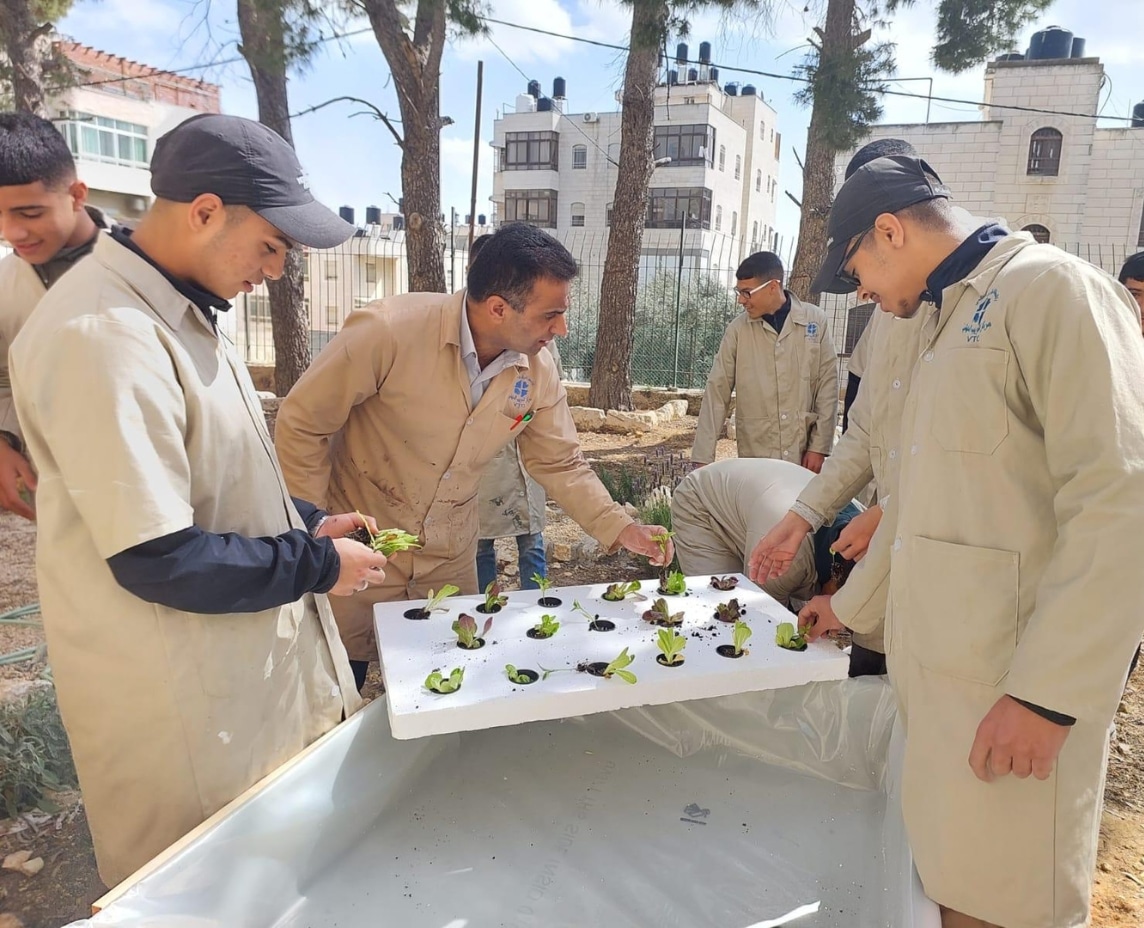
This proposal focuses on strengthening technical and vocational education and training for youth, leveraging previous experience in this sector as well as in business incubation and acceleration processes. The initiative aims to boost the development of agribusinesses, responding to the needs of the local labor market and facilitating the integration of the young population into the workforce.
The chronic weakness of the Palestinian labor market has been exacerbated by the multiple consequences of the current conflict. Alongside falling wages and shifts across various sectors, this has led to significant income losses for both workers and employers. The immediate impact of this lack of income is a rise in poverty and food insecurity; therefore, the goal of incentivizing economic activities aimed at **job creation and economic growth** is more critical than ever. The project takes into account the extreme vulnerability of Palestinian youth, proposing an intervention adapted and extended to the rural and peri-urban areas of Jerusalem and Ramallah. This aims to foster a favorable framework that increases access to employment as a livelihood, whether through self-employment or wage labor. The vocational training programs are designed to promote quality employability with an innovative approach, focusing on productive agricultural activities that contribute to building a response capacity for food needs in the event of movement restrictions.
While the general objective is to contribute to the **economic resilience** of the young population, the specific objective is to improve access to employability and economic entrepreneurship based on three pillars of action. The first pillar aims to enhance the capacities of Palestinian youth by establishing a dual itinerary for those wishing to start a business and those seeking wage employment. The second component focuses on providing skills to those interested in entrepreneurship, utilizing tested training itineraries based on the **Business Model Canvas** methodology. Finally, the project will support business initiatives through an incubation and acceleration process, acting as a catalyst so that graduates of the project’s training programs can be employed by these enterprises.